The Hidden Cost of Conventional Jacketed Autoclave Design
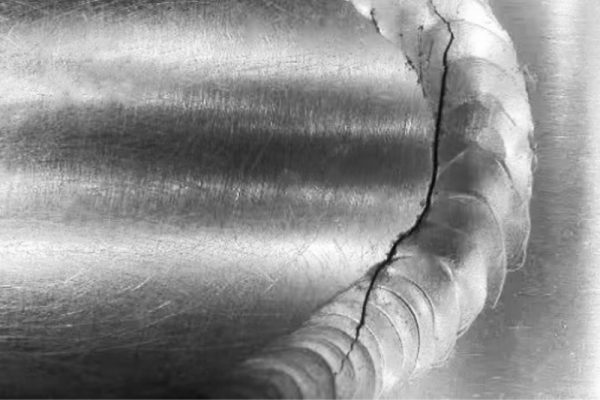
For decades, the standard approach to steam sterilizer construction has relied on a fully welded external jacket enveloping the sterilization chamber—a design intended to provide both structural reinforcement and thermal uniformity. Steam circulates within this jacket, heating the inner chamber indirectly while simultaneously serving as a pressure-retaining boundary. While functionally adequate, this conventional configuration carries significant engineering compromises that become increasingly problematic under the demanding operational profiles of modern healthcare facilities, pharmaceutical production environments, and Central Sterile Supply Departments (CSSD). The fundamental issue lies in the scale of welding required. A traditional jacketed autoclave demands continuous, full-perimeter welding along the entire interface between the inner chamber and outer jacket. This extensive weldment introduces substantial residual welding stress into the vessel structure, creating a persistent risk of thermal distortion during fabrication. More critically, the weld zones become preferential sites for stress concentration—an inherent vulnerability that directly impacts the vessel’s tolerance for the repeated pressurization and depressurization cycles that define daily sterilization operations. Industry literature has documented that cracking failures in sterilization vessels are frequently induced by the synergistic effects of stress corrosion cracking and fatigue, with cyclic tensile stress in welded joints serving as the primary driver for crack propagation. Once cracking initiates, continued use compromises sterilization efficacy while also introducing explosion hazards, particularly problematic in facility settings with dense personnel occupancy. These are not abstract theoretical concerns; they represent real operational and safety liabilities associated with conventional jacketed designs.
The ring-stiffened construction represents a fundamental departure from the traditional jacketed paradigm. Instead of enveloping the entire chamber in a continuous welded jacket, this approach employs discrete reinforcing rings—best visualized as structural “steel collars” fitted around the chamber at regular intervals. These rings provide the necessary structural reinforcement to withstand high internal pressures without requiring the extensive weld area demanded by full-jacket designs. Crucially, because the continuous external jacket has been eliminated, steam delivery is reconfigured entirely. Rather than relying on indirect heating through an intermediate jacket, the ring-stiffened configuration introduces steam through multiple injection points directly into the chamber. This direct delivery approach, when combined with staged or gradient heating sequences, achieves uniform temperature distribution without incurring the structural penalties of welded-jacket construction. This design philosophy has been validated across the pressure vessel industry, with certain rectangular-section autoclaves adopting externally reinforced members welded to flat vessel surfaces—a design approach recognized by codes such as ASME Section VIII Division 2, which provides alternative rules for Design By Analysis routes, acknowledging that such geometries require careful stress field classification and fatigue-based analysis due to the challenges posed by shell intersections. The ring-stiffened method precisely addresses these analytical challenges by minimizing problematic intersections.
| Weld Area | Extensive full-perimeter continuous welding | Discrete, localized welds at ring junctions only |
|---|---|---|
| Residual Welding Stress | High—significant distortion and fatigue risk | Low—dramatically reduced stress concentration |
| Overall Weight | Heavy—full outer jacket adds substantial mass | Significantly lighter—rings provide strength without bulk |
| Cyclic Load Tolerance | Moderate—weld zones susceptible to crack initiation under repeated cycles | High—absence of continuous weld lines eliminates preferential crack sites |
| External Inspection Access | Blocked by full jacket; leaks undetectable without disassembly | Fully exposed; visual inspection and non-destructive testing readily performed |
| Repair Complexity | Extremely difficult—jacket removal often requires complete replacement | Straightforward—exposed geometry simplifies localized repair |
| Thermal Efficiency | Indirect heating via jacket; potential for thermal lag | Direct multi-point steam injection with uniform temperature gradient |
The comparative advantages extend beyond immediate performance metrics. The ring-stiffened configuration also reduces water and steam consumption, lowering the overall utilities required per sterilization cycle—an attribute increasingly valued as healthcare and pharmaceutical operations pursue sustainability targets alongside technical performance requirements.
Perhaps the most compelling technical advantage of ring-stiffened construction emerges under cyclic loading conditions—the very operational reality that defines steam sterilization equipment. Autoclaves do not operate under steady-state conditions; they undergo repeated pressurization and depressurization cycles, each imposing transient stresses on the vessel structure. The joint between cylinder and flange in conventional sterilization pots is particularly vulnerable to low-cycle fatigue, with cyclic tensile stress accelerating crack propagation. Finite element modeling and fatigue analysis modules have consistently identified the transitional radii between the vessel wall and bottom as fatigue-critical locations. The ring-stiffened design addresses this vulnerability at its root: by eliminating the continuous weld seam that characterizes the jacketed approach. With fewer and more strategically placed welds, the number of potential fatigue initiation sites drops precipitously. The reinforcement rings themselves function as crack-arresting features, interrupting the propagation path that a continuous welded seam—if crack-initiated—would otherwise provide. Manufacturers who adopt stress-relief treatments, including controlled heating, holding, and slow cooling protocols following welding operations, can further enhance fatigue life by eliminating residual tensile stresses from weld zones. This enhanced fatigue tolerance translates directly into extended service life. The operable life of steam sterilization vessels is not measured in calendar years alone but in cycles survived without degradation. A design that demonstrably improves cyclic load performance offers corresponding improvements in long-term reliability and asset longevity—critical considerations for capital-intensive equipment operating in continuous-duty environments.
Joyhann has advanced beyond generic ring-stiffened principles to develop a proprietary implementation optimized for pulse vacuum steam sterilization applications. The company’s ring-stiffened construction, featured across its MZQ-S series of pulse vacuum sterilizers, represents a refined engineering solution that integrates internal reinforcement rings with multi-point steam intake and staged heating protocols to achieve consistent temperature gradients throughout the chamber volume. The technical execution extends beyond basic structural geometry to incorporate precision manufacturing processes that ensure weld quality and dimensional consistency. Key components—front panels, doors, and door retainers—are machined on CNC machining centers to absolute tolerances, while chamber cylinders are automatically welded using plasma welding technology to produce flawless seam integrity. These fabrication controls, combined with adherence to strict welding protocols and post-weld stress-relief treatments, guarantee long-term reliability under the rigorous demands of daily sterilization cycles. Joyhann’s broader engineering portfolio supports this innovation, with the company holding 41 patents across medical equipment technology domains. The MZQ-S series offerings span chamber volumes from 0.4 m³ to 1.5 m³, with multiple configurations accommodating varied facility footprints and throughput requirements. Models include both built-in evaporator and built-in steam generator options, with motor power ratings from 43.5 kVA to 63 kVA across 380V power supply configurations. Weight reductions achieved through the ring-stiffened design—compared to equivalently sized jacketed vessels—directly simplify installation logistics and reduce structural support requirements for facility engineering teams.
The serviceability advantages of ring-stiffened construction deserve particular attention from facility design and engineering professionals—one of the key readership segments for whom lifecycle cost considerations are paramount. Traditional jacketed sterilizers present a formidable maintenance challenge: because the chamber is entirely encased in an external jacket, leakage detection is inherently difficult, requiring substantial disassembly to access potential failure sites. Once jacket leakage is confirmed, repair is often prohibitively complex, with many facilities accepting complete replacement as the only practical path forward. Ring-stiffened construction eliminates this problem entirely. With the external jacket removed, the chamber exterior is fully exposed, enabling routine visual inspection and non-destructive testing without any disassembly. Leaks—an extremely rare occurrence in a well-fabricated ring-stiffened vessel—can be immediately identified and accessed for localized repair. This accessibility also benefits proactive maintenance programs, allowing facility engineering teams to monitor weld integrity over time and address incipient issues before they develop into service-interrupting failures. The modular architecture of Joyhann’s implementation further enhances serviceability, with single-side service access reducing both downtime and the complexity of maintenance interventions. For CSSD managers and facility engineers balancing equipment uptime against maintenance budgets, these serviceability advantages compound into meaningful total cost of ownership reductions over the asset’s operational lifetime.
The broader sterilizer market context reinforces the strategic importance of advanced vessel design. The global autoclave market, valued at approximately USD 3.45 billion in 2025, is projected to grow at a compound annual growth rate (CAGR) of 6.2%, reaching USD 5.93 billion by 2034. Within this expanding market, key trends include automation and digitalization of control systems, integration of IoT-enabled features for remote monitoring and predictive maintenance, energy efficiency improvements, and increasing demand for compact yet scalable modular designs. The shift toward ring-stiffened construction aligns directly with these market trajectories. Lighter vessel weight supports modular configuration strategies, simplified logistics, and reduced facility structural requirements. Enhanced fatigue tolerance extends service life, reducing replacement frequency and aligning with sustainability goals by decreasing equipment-related material consumption over time. Exposed external geometry supports IoT-enabled condition monitoring by allowing sensors and inspection systems to access vessel surfaces without interference from jacketing structures. In the specific domain of pulse vacuum sterilization—where efficient air removal is critical to sterilization efficacy—the ring-stiffened configuration has been recognized as a European-origin design standard for rectangular-section autoclaves, valued for its ability to maintain structural integrity while achieving the high-efficiency air evacuation rates required for modern medical and pharmaceutical sterilization protocols.
The transition from traditional welded-jacket construction to ring-stiffened vessel architecture represents more than an incremental improvement—it constitutes a fundamental rethinking of how sterilization pressure vessels should be engineered for the operational demands of contemporary healthcare, pharmaceutical, and research environments. By dramatically reducing weld area, minimizing residual stress, improving fatigue tolerance, and enabling accessible serviceability, the ring-stiffened approach delivers a combination of structural performance and lifecycle economy that conventional designs cannot match. Joyhann’s proprietary implementation of ring-stiffened technology, supported by precision CNC fabrication, plasma welding processes, and stress-relief treatments, offers facility engineering and infection control professionals a compelling alternative to legacy jacketed equipment. For organizations evaluating capital sterilization assets, the engineering case is clear: design innovation that reduces failure modes, extends service life, and simplifies maintenance is not mer
1. ASME Boiler and Pressure Vessel Code, Section VIII – Rules for Construction of Pressure Vessels. The American Society of Mechanical Engineers. 2023 Edition.
2. Bushnell, D. Buckling of Shells – Pitfalls for Designers. AIAA Journal, Vol. 19(9), 1981, pp. 1183–1226.
3. Timoshenko, S. P., & Gere, J. M. Theory of Elastic Stability (2nd Edition). McGraw-Hill, 1961.
4. EN 13445-3:2021 – Unfired Pressure Vessels – Part 3: Design. European Committee for Standardization (CEN), Brussels, 2021.
5. ISO 17665:2024 (FDIS) – Sterilization of health care products – Moist heat – Requirements for the development, validation and routine control of a sterilization process for medical devices. International Organization for Standardization, 2024.
6. Updegraph, D. W., & Sun, C. T. Analysis of Ring-Stiffened Composite Cylinders under External Hydrostatic Pressure. Journal of Composite Materials, Vol. 29(10), 1995, pp. 1345–1367.
7. Composite Materials Handbook – CMH-17 (formerly MIL-HDBK-17). Volume 3, Chapter 4 – “Process Control: Autoclave Curing.” SAE International, current edition.

Custom ports manufacturing, from rapid prototyping to on-demand production.
Subscribe to receive exclusive insights and priority updates from Joyhann. Elevate your practice with our curated intelligence.
© Nortek HealthCare Group Ltd., 2009-2026. All rights reserved.
This site operates under the laws of the People's Republic of China. Your access and use constitute acceptance of these Terms of Use and our Privacy Policy. All content is governed by our Privacy Notice. For details or inquiries, please Contact Us or use the site's search function.