Joyhann presents a comprehensive, zone‑based approach to healthcare textile reprocessing. Our integrated platform combines advanced barrier washer technology, validated thermal disinfection protocols, and ergonomic workflow infrastructure into a seamless system. Each step is engineered to eliminate cross‑contamination between soiled and clean textiles, optimize throughput, and provide complete process traceability—from soiled linen reception to sterile storage and distribution.
The following steps represent the logical progression of healthcare textile reprocessing, adhering to CDC guidelines, ISO/TC 304 standards, and the principle of unidirectional workflow from contaminated to clean zones. Every Joyhann solution is embedded within this flow as a critical component of an integrated infection prevention system.
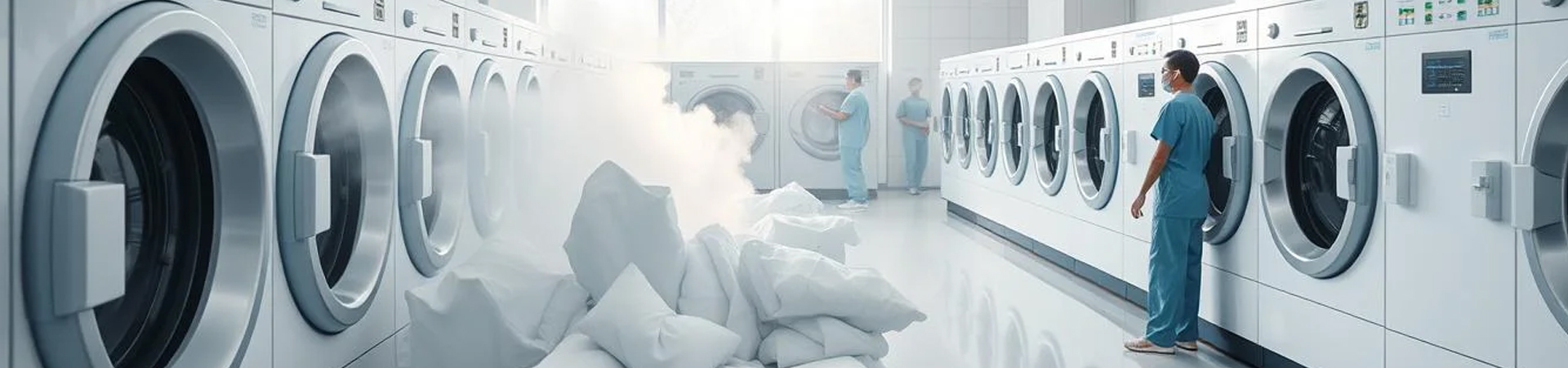
Objective: Contain bioburden at the point of use and prevent aerosolization of contaminated lint during transport to the laundry facility.
Soiled textiles—including patient linens, surgical drapes, healthcare personnel attire, and procedure room fabrics—are removed from patient care areas with minimal agitation to prevent generation of contaminated lint aerosols. Linens are placed into clearly labeled, leak‑proof containment bags or color‑coded textile bags in the patient care area. Bags are securely tied to prevent leakage and transported via designated soiled linen carts.
Technical Note: OSHA and CDC guidelines prohibit sorting or rinsing of contaminated laundry at the location of origin. All containment and transport protocols comply with standard precautions for bloodborne pathogen exposure prevention.
Objective: Maintain strict physical separation between contaminated and clean processing areas through facility design and barrier equipment.
Upon arrival at the laundry facility, soiled linen enters through a dedicated contaminated reception zone. The facility layout follows the “two‑zone, three‑passage” principle: distinct employee, soiled linen intake, and clean linen dispatch channels. Soiled textiles are sorted only in this designated contaminated area, with personnel wearing appropriate PPE (tear‑resistant rubber gloves, fluid‑resistant gowns, and face protection when splashing risk exists).
Technical Note: Laundry equipment must be used and maintained according to manufacturer’s instructions. Damp textiles should never be left in machines overnight to prevent microbial proliferation.
Objective: Achieve hygienically clean textiles—free of vegetative pathogens—through validated combinations of thermal, mechanical, and chemical action.
The laundering process consists of multiple stages: flush, main wash, bleaching, rinsing, and souring. For healthcare applications, thermal disinfection is the critical pathogen inactivation step. Joyhann barrier washers are programmed with cycles that achieve the required time‑temperature parameters.
Thermal Disinfection Parameters:
Workflow Integration: Washers are positioned to receive soiled linens from the contaminated zone and discharge clean, thermally disinfected textiles directly into the clean processing zone. This unidirectional flow eliminates any possibility of cross‑contamination.
Technical Note: Disinfectants are generally not required for routine laundering when thermal parameters are achieved. However, for linens from isolation areas or those heavily contaminated with blood/body fluids, facility‑approved intermediate‑level disinfectants may be incorporated.
Objective: Complete the drying process to prevent microbial re‑growth, and inspect textiles for cleanliness and integrity before packaging.
After washing, textiles are transferred to high‑capacity industrial dryers. Complete drying is essential—residual moisture creates conditions conducive to microbial proliferation. Damp textiles should never be left in machines or holding areas.
Inspection Protocol: Clean, dried textiles are inspected under adequate lighting in the clean processing zone. Trained personnel examine for:
Workflow Integration: Inspection stations are positioned downstream of drying equipment, with designated bins for textiles requiring re‑processing or repair.
Technical Note: Hygienically clean laundry carries negligible risk to healthcare workers and patients, provided that clean textiles are not inadvertently contaminated before use.
Objective: Protect processed textiles from recontamination during storage and transport to clinical units.
After inspection and folding, clean linens are packaged to prevent exposure to dust, debris, and environmental contaminants. Storage and transport systems must maintain separation between clean and soiled streams.
Workflow Integration: Storage areas are physically separated from contaminated processing zones, with separate corridors or transport routes for clean linen dispatch. Carts used for clean linen transport are never used for soiled linen collection.
Technical Note: Each floor or ward should have a designated room for sorting and storing clean linens. Carts and containers must be cleaned at least daily with neutral detergent and warm water.
Objective: Verify that each stage of the laundering process consistently meets defined specifications for microbial reduction and textile integrity.
Quality assurance in healthcare laundry requires a multi‑layer approach encompassing physical parameters, microbiological testing, and documentation. Joyhann provides comprehensive validation tools integrated into the workflow.
Technical Note: For facilities outsourcing laundry services, contracts must specify quality requirements, and receiving facilities should conduct regular inspections of returned textiles, including periodic microbiological testing.
Subscribe to receive exclusive insights and priority updates from Joyhann. Elevate your practice with our curated intelligence.
© Nortek HealthCare Group Ltd., 2009-2026. All rights reserved.
This site operates under the laws of the People's Republic of China. Your access and use constitute acceptance of these Terms of Use and our Privacy Policy. All content is governed by our Privacy Notice. For details or inquiries, please Contact Us or use the site's search function.