Joyhann presents an integrated, step‑by‑step approach to the safe, compliant, and sustainable treatment of biohazardous waste. Our system transforms infectious and potentially hazardous materials into inert, non‑infectious residue suitable for municipal disposal. By combining high‑capacity shredding, validated steam sterilization, and automated material handling, we deliver a closed‑loop solution that eliminates cross‑contamination risk, ensures regulatory compliance (e.g., WHO, EPA, local medical waste guidelines), and provides complete traceability from waste collection to final disposal. The following steps represent the logical progression of biohazard waste processing. Every Joyhann product is embedded within this flow—not as standalone equipment, but as a critical component of an integrated system engineered for safety, efficiency, and environmental responsibility.
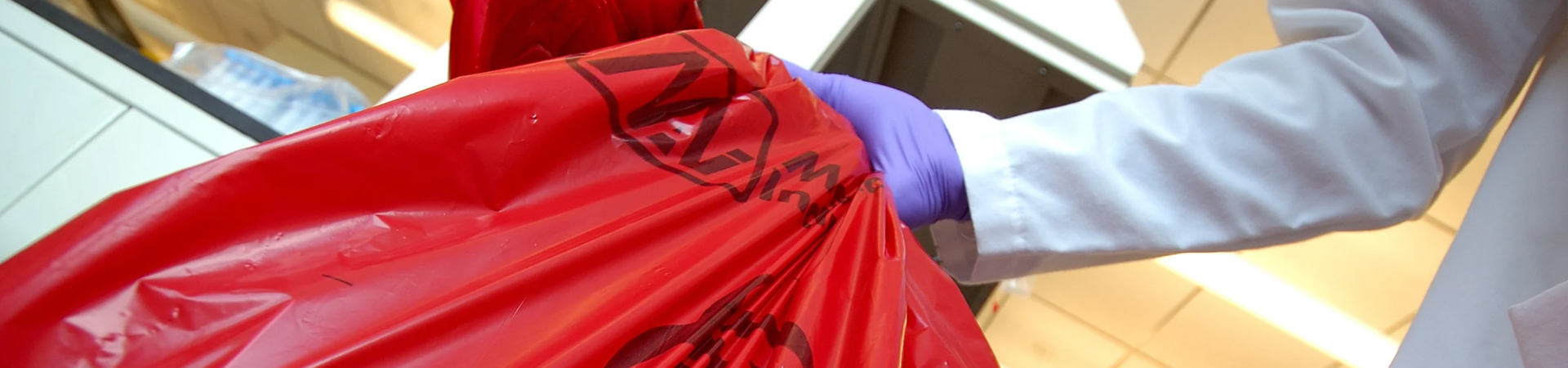
Objective: Safely aggregate biohazard waste at the point of generation and transfer it into the processing stream without manual exposure.
Waste is collected in color‑coded, puncture‑resistant containers or lined carts, segregated by category (e.g., pathological, sharps, infectious, pharmaceutical). Containers are transported to the waste processing area using dedicated Transport & Storage carts, designed with smooth, non‑porous surfaces for easy decontamination and equipped with secure lids to prevent spillage.
Upon arrival, the Belt Conveyor system provides a hands‑free loading interface. Waste containers are placed onto the conveyor, which automatically advances them toward the shredding stage. The conveyor is engineered with a spill‑containment trough and integrated wash‑down capability, ensuring that any accidental leakage is contained and immediately sanitized.
Workflow Integration: The conveyor interfaces directly with the shredder infeed hopper, eliminating the need for personnel to manually lift or tip containers. Photoelectric sensors and emergency stop cords ensure operator safety throughout the loading process.
Technical note: The conveyor speed is adjustable (0.5–5 m/min) and can be synchronized with downstream equipment to prevent over‑feeding or jamming. All contact surfaces are constructed from 304 stainless steel, resistant to corrosive waste streams.
Objective: Reduce waste volume and rupture containment vessels to ensure uniform steam penetration during sterilization.
Containers and their contents are fed directly into the Shredder, a high‑torque, dual‑shaft industrial shredder specifically configured for medical waste. The unit employs hardened steel cutting blades that rotate at low speed to generate high shear forces, tearing through rigid plastics, metal sharps containers, textiles, and glass without generating airborne aerosols or excessive heat.
The shredder reduces waste to a homogenous particulate size (typically 20–50 mm), which is the critical prerequisite for effective sterilization. By rupturing sealed bags and containers, the shredder eliminates internal air pockets and ensures that every particle surface is exposed to saturated steam during the subsequent sterilization phase.
Shredder: Dual‑shaft design with replaceable, hardened alloy blades; automatic reverse function to clear jams; heavy‑duty gearbox and motor (15–45 kW depending on throughput). The infeed hopper is equipped with a safety interlock that halts operation when the lid is opened.
Workflow Integration: Shredded material discharges directly into a sealed transfer bin or onto a second Belt Conveyor that conveys the processed waste into the sterilizer loading system. This closed transfer path prevents any fugitive emission of aerosols or contaminants.
Technical note: The shredder is rated for continuous operation and is compatible with the full spectrum of biohazard waste, including sharps, IV tubing, glass vials, and plasticware. Routine blade maintenance is facilitated by a hydraulically assisted opening mechanism.
Objective: Achieve a validated sterility assurance level (SAL) of 10⁻⁶ or greater, rendering the waste non‑infectious and safe for municipal disposal.
The shredded waste is loaded into the Medical Waste Steam Sterilizer, a purpose‑built autoclave engineered specifically for high‑throughput biohazard treatment. Unlike conventional CSSD sterilizers, this system incorporates large‑capacity chambers (2 m³ to 12 m³) and aggressive air removal cycles to ensure steam penetration into the dense, heterogeneous waste matrix.
Medical Waste Steam Sterilizer: Chamber constructed from 316L stainless steel with full welding and polished interiors to resist corrosion; pneumatically operated, interlocked doors; integrated data logging with thermal printer and USB/network export; fully programmable logic controller (PLC) with HMI touchscreen.
Workflow Integration: The sterilizer is positioned immediately downstream of the shredder to minimize handling of unsterilized material. A pass‑through configuration separates the contaminated loading area from the clean discharge zone, enforcing unidirectional workflow and preventing recontamination.
Technical note: The system is equipped with a closed‑loop condensate treatment system that collects and thermally disinfects all effluent from the sterilization process before release to the sanitary sewer, ensuring full environmental compliance.
Objective: Reduce residual moisture content and further minimize waste volume to lower disposal costs and facilitate safe handling.
Following sterilization, the treated waste remains moist due to condensate generated during the steam phase. To optimize downstream handling and reduce landfill weight, the material is subjected to a drying cycle. While the Medical Waste Steam Sterilizer incorporates a final drying vacuum, facilities requiring enhanced dryness can integrate a dedicated Drying Cabinet or an in‑line thermal drying module.
In configurations employing a Drying Cabinet, sterilized waste is transferred onto perforated trays and subjected to forced air circulation via HEPA‑filtered, heated air (up to 110°C). Real‑time humidity sensors terminate the cycle once the specified residual moisture threshold (typically <15%) is achieved.
For high‑throughput operations, an integrated post‑sterilization vacuum drying system within the sterilizer chamber may suffice, eliminating the need for manual tray handling.
Workflow Integration: Drying equipment is located in the clean discharge zone, immediately adjacent to the sterilizer unloading side. This positioning allows seamless transfer via closed carts or conveyors, maintaining the integrity of the clean area.
Technical note: Dried, sterilized waste has a significantly reduced weight (up to 40% moisture removal) and volume, which translates directly into lower transport and disposal costs. The dried material is also less conducive to microbial regrowth during temporary storage.
Objective: Transfer sterilized, size‑reduced waste to a final disposal pathway with minimal handling and complete chain‑of‑custody documentation.
After sterilization and optional drying, the inert waste is discharged from the clean side of the system. It is collected in heavy‑duty, sealable bins or compacted into waste containers using integrated compaction modules. The material now meets regulatory criteria for non‑infectious waste and can be disposed of as municipal solid waste—typically in a landfill or waste‑to‑energy facility.
Transport & Storage Carts: Dedicated clean‑side carts, visually distinct from those used in the contaminated zone, transport the processed waste to temporary storage or direct loading onto disposal vehicles. Carts are constructed from stainless steel with smooth surfaces, lockable casters, and integrated labeling for lot tracking.
Traceability: Each batch is assigned a unique cycle number, which is logged in the sterilizer’s data management system. Records include waste origin, operator ID, cycle parameters, and biological indicator results, ensuring full traceability for regulatory audits.
Workflow Integration: The clean discharge area is physically separated from the contaminated reception zone by a barrier wall, with the sterilizer serving as the pass‑through interface. This architectural segregation is fundamental to infection prevention and is supported by Joyhann’s facility planning services.
Technical note: For facilities with high daily throughput, Joyhann offers automated bagging or compactor systems that further streamline the discharge process and minimize operator exposure to even sterilized material.
Objective: Provide the tools and protocols to verify that every waste processing cycle consistently achieves sterilization efficacy and meets all applicable regulatory standards.
Validation is the cornerstone of any responsible biohazard waste management program. Joyhann embeds a comprehensive validation framework into the system, enabling facilities to demonstrate compliance with international standards (e.g., EN 13060, ISO 11140, local medical waste regulations) and to maintain documentation for accreditation bodies.
Biological Indicators (BIs): For steam‑based waste sterilization, Geobacillus stearothermophilus spore strips or self‑contained vials (≥10⁶ spores per carrier) are placed within process challenge devices (PCDs) embedded in the waste load. After the cycle, BIs are incubated in automated readers that provide results within 24–48 hours, with digital records linked to each cycle.
Chemical Indicators: Class 5 integrating indicators (e.g., Bowie‑Dick sheets for air removal verification) and multi‑variable chemical indicators are used for daily cycle confirmation, providing immediate visual assurance that critical parameters have been met.
Physical Measurement: Calibrated thermocouples, pressure transducers, and data loggers are employed during installation qualification (IQ), operational qualification (OQ), and performance qualification (PQ). Joyhann’s validation engineers provide on‑site support to map temperature distribution within the sterilizer chamber under full‑load conditions, identifying any cold spots and validating cycle parameters.
Technical note: All validation data can be exported to hospital or facility information systems, supporting regulatory inspections, sustainability reporting, and continuous process improvement. Joyhann also provides ongoing training and annual requalification services to ensure long‑term compliance.
Subscribe to receive exclusive insights and priority updates from Joyhann. Elevate your practice with our curated intelligence.
© Nortek HealthCare Group Ltd., 2009-2026. All rights reserved.
This site operates under the laws of the People's Republic of China. Your access and use constitute acceptance of these Terms of Use and our Privacy Policy. All content is governed by our Privacy Notice. For details or inquiries, please Contact Us or use the site's search function.